

The shift from hardware to energy
For years, compute infrastructure was defined by hardware performance. Today, that dynamic has changed.
The availability, cost, and reliability of energy have become the primary constraints for scaling compute-intensive operations.
As workloads such as artificial intelligence and high-performance computing grow, access to power is increasingly the bottleneck that determines where and how infrastructure can be deployed.
Limitations of traditional models
Conventional data center models rely on grid connectivity, which introduces several structural constraints.
Access to power is often limited, expansion timelines are long, and costs are subject to market volatility.
These limitations create friction in deployment and reduce the ability to scale efficiently in response to growing demand.
Building around energy, not adapting to it
BigSur Energy’s approach reverses this model.
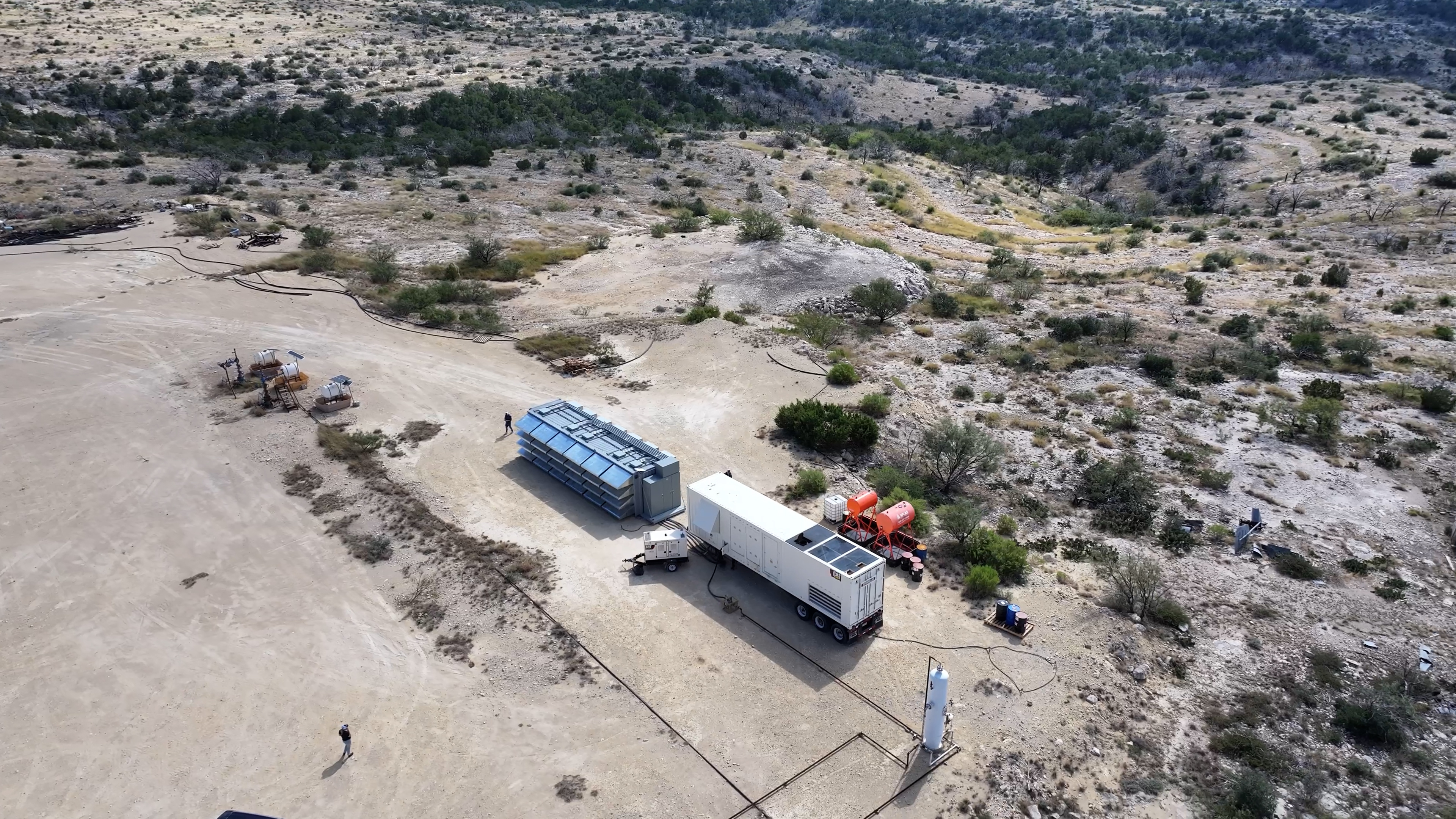
Instead of adapting infrastructure to available grid capacity, the system is built directly at the source of energy.
By capturing stranded natural gas and converting it into electricity on-site, infrastructure is designed around energy availability rather than constrained by it.
Structural cost advantage
Energy is the largest cost component in compute infrastructure.
By generating power directly at the wellhead, BigSur Energy operates with a structurally lower cost base compared to grid-dependent alternatives.
This advantage is not temporary or market-driven, it is embedded in the architecture of the system itself.
Speed and deployment flexibility
Operating off-grid enables faster deployment cycles, as infrastructure is not dependent on grid interconnection timelines or centralized planning processes.
Combined with a modular design, this allows for incremental expansion and rapid scaling across multiple sites.
Capital efficiency through modularity
The ability to deploy, scale, and relocate infrastructure allows capital to be allocated more efficiently.
Instead of committing large amounts of capital to fixed locations, resources can be continuously optimized across a distributed network.
This results in a more adaptive and efficient infrastructure model.
Alignment between energy and compute
Traditional systems treat energy and compute as separate layers.
BigSur Energy integrates both into a single system, aligning production and consumption in real time.
This reduces inefficiencies, improves utilization, and enables a more coherent operating model.
A model built for the next generation of compute
As demand for compute continues to expand, infrastructure models that prioritize direct access to energy will play a defining role in the next phase of growth.
BigSur Energy is positioned within this shift, not as an incremental improvement, but as a fundamentally different approach to building infrastructure.